Leave Your Message

Blog

What Are China Top 10 Printers with Edge To Edge Printing?

What Are China Top 10 Printers with Edge To Edge Printing?

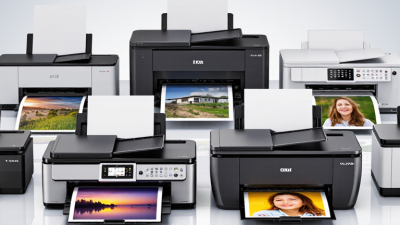
You’d think picking a printer for borderless stuff is all about the brand, right? Not really. Getting true edge-to-edge prints isn’t just on the printer—the paper size and your image settings have to play nice together. It’s kind of annoying: a full-bleed photo can look perfect on screen, then come out with this skinny white strip along one edge. Yeah, the little things really count. Frank Romano — you might know him as one of the most recognizable voices in printing industry analysis — has spent years talking about print tech and production. This next part isn't a verified verbatim quote from him, though; it's more of a paraphrase of a practical principle he's known for: a printer's real value shows up in the quality and consistency of the finished output. Honestly, that idea comes in handy when you're comparing printers from Epson, Canon, HP, Brother, and the other major brands in the Chinese market. Honestly, when it comes to borderless output, you really need to check the exact model's specs. You can't just assume it'll be the same because it's from a certain brand or product family. Okay, so this guide is all about ten printers that do edge-to-edge printing—and what you should actually check before buying one. You'll want to look at the paper sizes they support, what media they can handle, how much ink or toner will set you back, print speed, and whether the manufacturer's borderless instructions actually make sense. Here's a quick test worth doing: print a full-page image and give all four edges a good look under decent lighting. Does the color go all the way to the edge? Are the corners clean? Does the image get cut off when you didn't expect it? Honestly, these checks tell you a lot more than the feature label ever could. Specs can change depending on the model and region, so it's worth double-checking the current product docs before you buy. The comparison is a decent starting point, but definitely not a promise. Some options might be great for photo projects, while others just fit everyday documents better.
Read more »
Jason By:Jason - November 7, 2026
7 Best Woven Bag Top Hemming Machines in 2026

7 Best Woven Bag Top Hemming Machines in 2026

You wouldn’t think it by looking at it, but the top edge of a woven bag takes a lot of abuse. If the stitching is loose, the folds are uneven, or you skip a stitch here and there, it can really weaken the finished bag—and make packing slower than it should be. That’s where a woven bag top hemming machine comes in: it folds and stitches that edge consistently. But picking the right one isn’t just about specs on paper. It depends on your fabric, how much you’re producing, and the workflow you actually prefer. And honestly, the little things matter more than you’d expect. Bag width, fabric thickness, how stable the feed is, and whether you can easily make routine adjustments—all of that can impact your daily output. Okay, so this guide is basically about seven sewing machines that are actually worth your time in 2026. I tried to focus on the stuff that really matters in practice, not just the flashy claims. You know, sewing speed, what fabrics they can handle, how much control you have while operating them, maintenance headaches, and whether the manufacturer actually gives you clear product info. Here's the thing though: faster isn't always better. A machine that just glides through the fabric you actually sew with is going to be way more useful than one with a huge advertised speed. It's such an easy point to miss, honestly. Here’s the thing: specs and configurations can actually vary a lot depending on the supplier, so it’s worth confirming them before you buy. If you can, ask for a trial run using your own bags, then look closely at the hem—consistent folds, secure stitches, and clean corners are what you want. Also, don’t forget to ask about spare parts, training, and how fast their service team responds. Yeah, those details aren’t exactly thrilling, but they can make a big difference in the real cost of ownership. This shortlist is just a starting point—it’s not a substitute for testing everything against your actual production needs.
Read more »
Oliver By:Oliver - November 3, 2026
How to Choose the Best Cutting and Sewing Machine?

How to Choose the Best Cutting and Sewing Machine?

So, you're trying to pick the right cutting and sewing machine—where do you even start? Honestly, it comes down to what you'll actually throw at it. Something that's great for lightweight cotton might choke on thick denim or layered canvas, and it definitely won't love long production runs. So before you get sucked into comparing specs, take a step back. What materials are you using? How much output do you need each day? How much space do you have? And who's going to be running it? Answer those practical questions first, and you'll narrow down your options way faster than reading a million feature lists. Honestly, the little things matter more than you’d think. For instance, before you settle on a machine, look at the actual usable cutting width, what kind of blade or cutting method it uses, the stitch options, the feed mechanism, and how far you can adjust things. A smooth fabric feed can be a lifesaver—it helps keep your layers from shifting around. And when controls are easy to reach, routine changes just feel less annoying. If you regularly work with different fabric weights, ask whether you can adjust it without having to do some complicated setup every time. When you're picking a sewing machine, don't just look at the specs. Think about things like whether the stitches stay consistent, if you can control the speed smoothly, and whether you can actually find needles for it. Also, how does it do on curves or thick seams? Honestly, the best test is bringing your own fabric and trying it out—that'll show you stuff the product description won't. Reliability isn’t just about the machine itself—it’s also about how you maintain it and the support you can get. So check the cleaning instructions, whether replacement parts are easy to find, what the warranty actually covers, and what service options exist around you. And here’s the thing: a cheap price tag doesn’t always mean lower costs in the long run. Also, even if you pick a machine that’s perfect for your needs, there’s a learning curve. Setup time, especially, tends to take longer than you’d expect—don’t ask me how I know. That can make a big difference. Anyway, in this guide, I’ll compare the main machine types and features so you can balance performance with your budget and workload. Honestly, the best pick isn't always the most powerful model out there. It’s the one that actually fits your real production needs, the skills you’ve got, and where you plan to grow.
Read more »
Oliver By:Oliver - October 31, 2026
China Top 10 Heat Hemming Machine Suppliers?

China Top 10 Heat Hemming Machine Suppliers?

So, you're looking for the top 10 heat hemming machine suppliers in China? I get it – it's tempting to just compare prices and call it a day. But honestly, choosing one is way more than that. It's about getting the edge appearance right, making sure the bonding strength holds up, keeping production speed decent, and not forgetting about operator safety. China has a ton of manufacturers out there, but they're not all created equal – some are literally just for garment factories, while others focus on automotive textiles, outdoor gear, footwear, or even technical fabrics. So yeah, you need to know what you're getting into. So, there's this principle from Dr. Thomas Gries, a textile machinery expert, that goes: 'A machine earns its value through repeatable quality, not impressive specs.' That really stuck with us, so we kept it in mind while checking out the top Chinese suppliers—Richpeace, Wuxi JUKI, Zhejiang Lejia, and a few other solid names. They've got everything from hot-air hemming systems to ultrasonic edge machines, plus programmable units and even fully customized production lines. But at the end of the day, what truly matters is consistency—that's the real deal. You know, a reliable supplier should be clear about the technical data, let you test samples, have spare parts ready, train your operators, and give you real after-sales support. On your end, you've got to look at temperature stability, roller pressure, seam width control, power consumption, and compatibility with various fabric blends. I've seen machines that work great on polyester but totally fail on coated or elastic fabrics. Look, this ranking isn't set in stone — I can't stress that enough. Sure, a supplier who works with a tiny workshop might actually beat a big-name company when it comes to customization. On the flip side, that rock-bottom quote you see? It could secretly hide installation fees, delayed part deliveries, or documentation that's basically a maze. What we really dig into is how they perform in practice, their manufacturing know-how, how solid their engineering support is, whether they can handle exports smoothly, and what customers are saying about them. Of course, some of these details might shift as companies roll out new models, so take it with a grain of salt. So before you sign anything, you should really double-check the specs – they change all the time. And honestly, the best heat hemming machine isn't the fanciest one out there. It's the one that fits your materials, your workflow, your budget, and the quality you're aiming for. That's what matters.
Read more »
Oliver By:Oliver - October 27, 2026
Why Choose a PP Bag Top Hemming Machine?

Why Choose a PP Bag Top Hemming Machine?

So, why choose a PP bag top hemming machine? Well, the global woven polypropylene bag business is shifting—it's getting more quality-focused and a lot more automated. In Smithers’ 'The Future of Global Flexible Packaging to 2029,' productivity, material efficiency, and consistent sealing are called out as some of the biggest packaging priorities. And over at PMMI, they keep pointing out that labor shortages are nudging manufacturers toward automation that actually works in the real world. Put those together, and a PP bag top hemming machine starts to look pretty interesting, doesn't it? So what this does is give woven PP bags a cleaner, stronger top edge. The machine folds the hem, heats it, and stitches it—all with pretty controlled movement. For operators, that means more uniform bag openings, fewer loose threads, and steadier output overall. And on a busy line? That really matters. If the hem is off even a little, you can end up with rework, rejected bags, or filling that’s just a pain to deal with. Peter Steinbeck, CEO at Windmöller & Hölscher, has a principle that’s actually pretty useful: “Reliable automation should improve consistency before it chases speed.” And honestly, that fits top hemming equipment really well. A faster machine isn’t automatically a better one. Its real value depends on things like fabric thickness, bag dimensions, thread quality, how well the operator’s trained, and—yep—maintenance access. Smithers and the European Flexible Packaging Association are also big on resource efficiency when it comes to packaging production. That said, the savings you actually see at the machine level? They can differ quite a bit from factory to factory. From what I’ve seen in real production, automatic hemming can cut down on a lot of repetitive handling and help keep the look consistent. But—and this is important—installation alone doesn’t magically fix everything. Dust, uneven cutting, weak fabric... those can still be a problem. So buyers really should look at the whole workflow, run tests on actual PP fabric, and compare results under realistic conditions. Sounds like a simple purchase? Yeah, it’s not. Honestly, a careful trial usually tells you way more than a shiny brochure ever will.
Read more »
Sophie By:Sophie - October 22, 2026
What Is the Best PP Bag Manufacturing Machine from China?

What Is the Best PP Bag Manufacturing Machine from China?

Picking the best PP bag manufacturing machine from China isn’t just about comparing price tags or the production speeds listed in a brochure. You want a machine that actually fits your bag size, fabric weight, daily output, and the space you have in your workshop. And it should handle the basics well: stable extrusion, accurate circular weaving, clean cutting, and dependable sealing. Honestly, small mistakes get expensive fast. Uneven thickness can make bags weaker, and poor temperature control can lead to rough edges or constant stoppages. Most experienced buyers don’t just look at the main machine—they check the whole production line. They ask about motor quality, inverter performance, spare-part availability, operator controls, and after-sales support. Companies like Lohia Corp Limited, Zhejiang Xinlei Machinery Co., Ltd., and Wenzhou Zhuding Machinery Co., Ltd. each take different approaches to equipment and sit at different price levels. But a familiar name alone doesn’t tell you much. Ask for running videos, factory references, technical drawings, and sample bags—those usually show the practical differences pretty quickly. Look closely. A professional supplier should be able to explain output under real operating conditions, not just quote the highest lab number. Ask how the machine behaves during long shifts, when material changes, and during routine maintenance. Energy use matters too, especially since electricity costs show up in every finished bag. Safety guards, emergency stops, clear manuals, and operator training should be standard—not extras. Certification requirements can vary by destination, so buyers need to verify the applicable standards themselves. This guide compares key machine functions, supplier reliability, customization options, and lifetime operating costs. It also admits something uncomfortable: the cheapest machine may look efficient at first, but it can cost you more through downtime, waste, and delayed technical support.
Read more »
Oliver By:Oliver - October 19, 2026
2026 Top Ultrasonic Bag Top Hemming Machine?

2026 Top Ultrasonic Bag Top Hemming Machine?

Picking the 2026 top ultrasonic bag top hemming machine isn't just about comparing pretty catalog photos. Buyers need proof from real production runs, not just lab numbers. A solid evaluation should look at sealing strength, how clean the edge looks, cycle speed, energy use, and operator safety. You also can't ignore the bag material, thickness, coating, and how much you produce each day. Ultrasonic tech can make clean hems without thread, needles, or old-school heating elements. But performance can shift a lot depending on woven polypropylene, nonwoven fabric, laminated materials, and recycled blends. A dependable ultrasonic bag top hemming machine should give you stable pressure, accurate horn alignment, adjustable settings, and repeatable results. Small stuff matters here. If the horn is misaligned, you might get weak spots, uneven folds, or visible marks along the opening. And sometimes those defects show up after transport, not during inspection. This guide compares leading machine features with a practical, evidence-based eye. It looks at manufacturer experience, technical support, spare-part availability, training, and documented testing. Buyers should ask for sample runs using their own bags. Honestly, that step often tells you more than a shiny demo. Certification claims should be checked against current regional requirements and supplier paperwork, too. No single machine is perfect for every job. Even good equipment may need tooling changes or process tweaks. That's a real limitation. The best choice balances production reliability, finished-bag quality, maintenance access, and long-term operating cost. By mixing technical data with hands-on verification, manufacturers can choose an ultrasonic bag top hemming machine with more confidence and fewer costly surprises.
Read more »
Jason By:Jason - October 16, 2026
China Top 10 Woven Sack Making Machine Manufacturers?

China Top 10 Woven Sack Making Machine Manufacturers?

China’s woven packaging sector has really moved beyond just making basic bags. These days, it’s more like an integrated machinery industry. A Woven Sack Making Machine, for example, might handle extrusion, circular weaving, cutting, printing, gusseting, and stitching—all in one linked setup. And those stages? They directly affect output stability, how many people you need, and the quality of the finished bags. So here’s a practical look at ten Chinese manufacturers, based on what buyers actually care about. The comparison weighs machine speed, fabric width, automation, energy use, spare-parts access, commissioning, and after-sales support. It also checks technical documentation and visible customer evidence. Names you’ll run into in this market include Jiangsu Fangbang Machinery, Zhejiang Chovyting Machinery, Wenzhou Huachang Machinery, Wenzhou Zhuding Machinery, and Qingdao Huahongxing Plastic Machinery. But their product ranges and service capabilities? Not identical. Packaging machinery specialist Michael R. Wilson puts it well: “Reliable output begins with stable process control, not impressive speed.” That’s a pretty useful reminder on a busy factory floor. A fast line can still let you down if tension fluctuates, ink registration drifts, or stitching comes out uneven. And those small defects get expensive fast once you’re talking thousands of sacks. Now, this ranking is meant to be practical, not absolute. Public supplier info can be incomplete, and some performance claims really need factory verification. Before deciding, buyers should ask for sample production, component lists, warranty terms, and running-cost data. A careful visit can reveal things brochures hide—noise, operator access, changeover time. The best Woven Sack Making Machine isn’t always the fastest one. It should fit your material, bag dimensions, production volume, and technical team. That’s an easy point to overlook.
Read more »
Jason By:Jason - October 12, 2026
7 Tips for Choosing a Jumbo Bag Cutting and Sewing Machine

7 Tips for Choosing a Jumbo Bag Cutting and Sewing Machine

Picking the right jumbo bag cutting and sewing machine isn't just a small decision—it can shape how good your production looks, how fast things run, and what you end up paying over the long term. These machines have to deal with woven polypropylene fabric, repeated cutting cycles, and some pretty demanding stitching work. Get it wrong, and you're looking at uneven edges, loose seams, wasted fabric, and downtime you really didn't need. So here's a practical guide with seven tips for judging machine performance before you buy. It covers cutting accuracy, sewing strength, automation, maintenance access, operator safety, and spare-part support. And honestly, in real factory evaluations, the small details often matter most. A stable feeding table can keep fabric from shifting. A clear control panel can cut down training time. A reinforced sewing head can stay reliable when it's running nonstop. That said, a perfect spec sheet rarely exists. A faster machine might need more careful maintenance. A lower purchase price can hide higher energy or repair costs later. Buyers should compare samples, not just brochures. Ask suppliers to run the machine with your actual fabric weight, bag dimensions, and thread type. Look closely at the cut line. Pull the finished seam by hand. And watch how quickly operators can adjust settings. Reliable decisions also need evidence. Request technical documents, warranty terms, service procedures, and references from similar production facilities. Confirm whether commonly replaced parts are available locally—or if they ship, with clear lead times. Experienced suppliers should be honest about limitations, not promise flawless performance. The tips below will help manufacturers assess each option with more confidence and practical judgment.
Read more »
Sophie By:Sophie - October 9, 2026
7 Precision Bag Shaping Tips for Global Buyers?

7 Precision Bag Shaping Tips for Global Buyers?

For buyers around the globe, getting the perfect bag isn’t just about making it look good on a sample table. It’s also about making sure everything works smoothly — from how it fills, how it looks on the shelf, to how well it seals and how easily it can be shipped. I’ve seen bags that look flawless in the showroom, but once filled, they end up all wrinkled and floppy—that’s a pretty common thing and definitely worth paying attention to. Walter Soroka, who wrote *Fundamentals of Packaging Technology*, once described packaging as “the science, art, and technology of enclosing and protecting products for distribution, storage, sale, and use.” That’s still a good way to think about it. When we’re talking about precision bag shaping, the goal is to protect the product, but also to make sure it fits the actual equipment, materials, markets, and handling conditions it will encounter. It’s the small details that matter. For example, a tiny 2-millimeter variation in the gusset can actually change how many bags fit into a carton. If the film tension isn’t right, you might end up with diagonal seals or bags standing unstable. And just because a seal performs perfectly in the factory doesn’t mean it’ll hold up after heat, jostling during transport, or long-term storage. All these little things can add up—leading to waste, customer complaints, or higher costs once everything is tallied up. This guide walks through seven practical things that international sourcing teams should definitely check. It covers the shape of the bag, how the film behaves, how accurately it forms, the reliability of seals, how well it works with filling, inspection methods, and communication with suppliers. The idea isn’t to chase perfection—it's about consistent, reliable performance during actual production. Of course, some things might still go wrong. That’s why responsible buyers make a point of requesting filled samples, dimensional records, seal test results, and even transport simulations before giving the green light. Regional packaging rules and standards also vary, so it’s smart to involve local experts for technical validation. After all, a perfectly shaped bag only really counts if it survives the journey from the forming line all the way to the customer’s shelf.
Read more »
Jason By:Jason - October 4, 2026
How to Choose a Heating Bag Top Hemming Machine for Your Business

How to Choose a Heating Bag Top Hemming Machine for Your Business

Picking out the right Heating Bag Top Hemming Machine isn't just about comparing prices. You’ve gotta make sure it’s a good fit for the fabric you're working with—things like fabric weight, seam thickness, filling methods, and how much you plan to produce. For example, a soft cotton pouch feels different from a laminated polyester heating bag, and experienced operators will spot that difference pretty quickly. According to Grand View Research, the worldwide market for technical textiles is still on the rise, thanks to better performance, longer-lasting materials, and more specialized fabric uses. Smithers also points out that demand for reliable nonwoven and coated textile processes is growing. Why does this matter? Well, because making heating bags requires stable edge control and consistent stitching. Machines with adjustable guides, the right needles, and steady thread tension can really make a difference—helping to cut down on uneven hems and rework, which are tiny details but super important. It's a smart idea to actually look at real production samples. Ask your suppliers for stitched samples using your actual fabric, seam allowances, and bag openings. Get the data on how many stitches per minute the machine can do, what material thickness it can handle, its motor power, and how often it needs maintenance. Watching a factory demo in action beats just looking at a fancy brochure—it shows whether there’s vibration, thread breaks, how hard operators have to work, and how noisy it is. While your experience is a good guide, keep in mind that it can sometimes be biased. Just because you've used a familiar machine doesn’t automatically mean it’s the best option for productivity. Be sure to check service support, spare parts availability, training options, and warranty conditions from reputable manufacturers. Sometimes, a cheaper machine might seem good at first but could end up costing you more in labor due to constant adjustments. That’s a mistake some folks make—and regret. Ultimately, the best Heating Bag Top Hemming Machine is one that delivers quality, safety, and practical workflow. It should produce neat hems day in and day out. Before you place an order, do the math: consider your hourly output, inspection time, fabric waste, and operator skill level. Those numbers might surprise you and could influence your choice—so it’s worth doing some homework early on.
Read more »
Sophie By:Sophie - September 29, 2026
What Are the Top Types of BCS Liner Insertion Machines?

What Are the Top Types of BCS Liner Insertion Machines?

When you're trying to pick the right BCS liner insertion machine, it really all comes down to a few key things: the container you're using, the type of liner, and what your production goals are. A good machine should effortlessly guide the liner into place through the opening—without folding those edges or knocking into other equipment nearby. Even tiny misalignments can slow down your entire line or cause the liner to sit unevenly. It’s kind of a delicate dance, you know? You'll find different setups out there: manual or semi-automatic stations, inline automatic machines, rotary systems, and even robotic loading cells. Each has its own perks, depending on your factory layout and what kind of production volume you’re dealing with. For lower-volume runs or when you’re switching liners often, semi-automatic might be the way to go. If you want everything to run seamlessly in a line, inline machines are great—they work in sync with other upstream handling steps. Rotary systems support continuous movement, which can be pretty handy, and robotic cells are flexible enough to handle various container setups. Of course, how well any of these perform depends a lot on the specific configuration and your application. Now, you might see the term “BCS liner insertion machine” pop up online or in searches, but don’t just go with the label—make sure you’re comparing verified specs. Things like container dimensions, liner material, how consistent the insertion is, how easy it is to switch over, operator access, and how easy it is to clean are super important. And if possible, ask for a demo using your actual containers and liners. Pay attention to small details like how the liner mouth looks, the movement of the grippers, and whether the final placement looks perfect—that stuff really matters. Regarding quotes or expert opinions—it's best to get a verified statement from a real BCS liner insertion specialist. A good way to phrase it might be: “The right machine is the one that can handle your liner and container consistently at your desired line speed.” This kind of insight helps compare different machine types and understand the practical trade-offs. Keep in mind, not every application fits neatly into a specific category, so it’s worth digging into what works best for your unique situation.
Read more »
Sophie By:Sophie - September 25, 2026
What Is a Woven Bag Making Machine and How Does It Work?

What Is a Woven Bag Making Machine and How Does It Work?

A woven bag making machine takes tapes of polypropylene or polyethylene and transforms them into sturdy, practical bags. It's a pretty clever setup that combines several precise steps into one smooth production line. First, the tape extrusion process creates thin plastic ribbons. Then, these ribbons are fed into a circular loom, where they get interlaced into a tubular fabric—imagine a wide, flexible sleeve slowly moving along. It’s kind of fascinating to watch! Johannes Starlinger, who’s been around woven packaging machinery for a long time and works with Starlinger & Co. GmbH, often says, “Good woven packaging starts with stable tape and controlled machinery.” That’s a nice reminder that the quality of the bag isn’t just about stitching it together later. Nope, it all begins with the raw materials—making sure the tape has consistent texture, the right temperature, and steady tension. All these tiny details matter. From there, the machine takes over to cut, fold, print, stitch, or heat-seal the fabric. Some machines even add extras like gussets, liners, valves, or automatic stacking units—pretty nifty features that boost efficiency. Sensors keep an eye on things, checking fabric alignment and production speed, but don’t think those operators are out of a job—they’re still super important. They inspect tape thickness, seam strength, print placement, and the final dimensions of each bag during their shift. And here’s the thing—small defects can turn into big problems! If a seam is a bit loose, it might open up when the bag gets filled. Uneven tension can cause unsightly stripes, and too much heat can weaken the plastic. All these issues demand experience and attention—automation helps, but it’s not the whole story. From the outside, the process looks simple, but trust me, it’s not quite that easy. This guide walks you through each step of making woven bags—starting from preparing the materials all the way to inspecting the finished product. We’ll also touch on energy consumption, maintenance needs, safety for operators, and realistic expectations for what these machines can do. Some models boast impressive output rates, but in reality, results really depend on how well the machine is designed, the quality of materials, operator skill, and how consistently maintenance is done. That’s a detail worth paying attention to.
Read more »
Sophie By:Sophie - September 21, 2026
China Best Automatic Twist And Gusset Forming Machine?

China Best Automatic Twist And Gusset Forming Machine?

Picking the best automatic twist and gusset forming machine from China isn't just about comparing prices or flicking through polished product images. Honestly, a good evaluation involves digging into how accurately the machine folds and twists, how fast it works, what types of materials it can handle, and how quickly the support team responds when you need help. All these little details really add up—and they make a big difference on a busy production line. The machine should reliably produce consistent twists and gussets without messing up the paper, film, or laminated materials. Usually, it's the operators who notice issues first—like uneven folds, loose shaping, loud noises, or constant tweaking. Even small flaws can turn into big expenses, especially when you're running thousands of bags a day. So, don’t hesitate to ask manufacturers for sample results, videos of testing, detailed technical drawings, and clear data on how it operates. Visiting the factory in person is also a good idea—it can give you the real scoop on component quality, wiring, safety features, and how easy it is to do maintenance. Experience really matters here. A trustworthy supplier should be able to walk you through how their automatic twist and gusset system handles different bag sizes and materials of various thicknesses. They should also cover things like setup time, how easy it is to switch between different jobs, spare parts availability, and operator training. Look out for independent certifications and traceable quality records—they’re good signs, but always double-check those documents. Keep in mind, not every flashy spec sheet guarantees top-notch production performance. When you're comparing options, it’s important to consider the limitations too. Some machines might be faster but need more skilled operators to fine-tune them. Others might be straightforward to run but offer fewer options for customization. The best fit depends on your actual order sizes, factory space, labor skills, and the kind of support you'll get down the road. This guide aims to help you weigh those practical factors, so you can find a reliable Chinese manufacturer based on real evidence—not just assumptions.
Read more »
Oliver By:Oliver - September 16, 2026
How to Choose a China Top Box Bag Making Machine Supplier

How to Choose a China Top Box Bag Making Machine Supplier

Picking out the right supplier for a China Top Box Bag Making Machine isn’t just about comparing prices online — there’s a bit more to it. You really want a partner who gets your specific needs, like your bag design, material thickness, sealing method, and production goals. A good machine should run smoothly with the materials you plan to use, whether that’s film, paper, or woven fabrics. Don't hesitate to ask for clear specs, sample bags, and even see a live demo of the machine in action. Details matter here. Keep an eye on the feeding system, inspect the sealing edge, and listen closely for any weird vibrations during continuous operation — those can be flags. When it comes to choosing a reliable supplier, look beyond just their website. Ask for proof of their factory capacity, quality control measures, export experience, and technical support services. Request videos that show similar machines running in real production environments—that really gives you a better idea. Also, double-check if they offer spare parts, installation help, operator training, and quick support if needed. A slick website isn’t everything; having a conversation with their engineering team usually says a lot—they tend to share practical insights that you won’t find elsewhere. Of course, no checklist is foolproof. Some suppliers might have top-notch machinery but poor after-sales support, or vice versa. It’s important to weigh these trade-offs carefully. Don’t forget to look at the total ownership cost. Things like energy efficiency, ease of maintenance, protection during delivery, and the expected output over the years all count. If you can, get independent inspections before making any payments or signing contracts—helps cut down the unknowns. Your contract should clearly spell out performance standards and how acceptance testing will work. The best manufacturers will be open with you, document what they promise, and be willing to answer your technical questions reasonably. Remember, the biggest company isn’t always the best fit. It’s about finding someone that matches your specific application, fits your budget, and can support your long-term production goals.
Read more »
Sophie By:Sophie - September 12, 2026